
Santa Sara Kali: The Black Madonna of the Romani People
Iya Ju Ifabgemisola
4/22/20264 min read
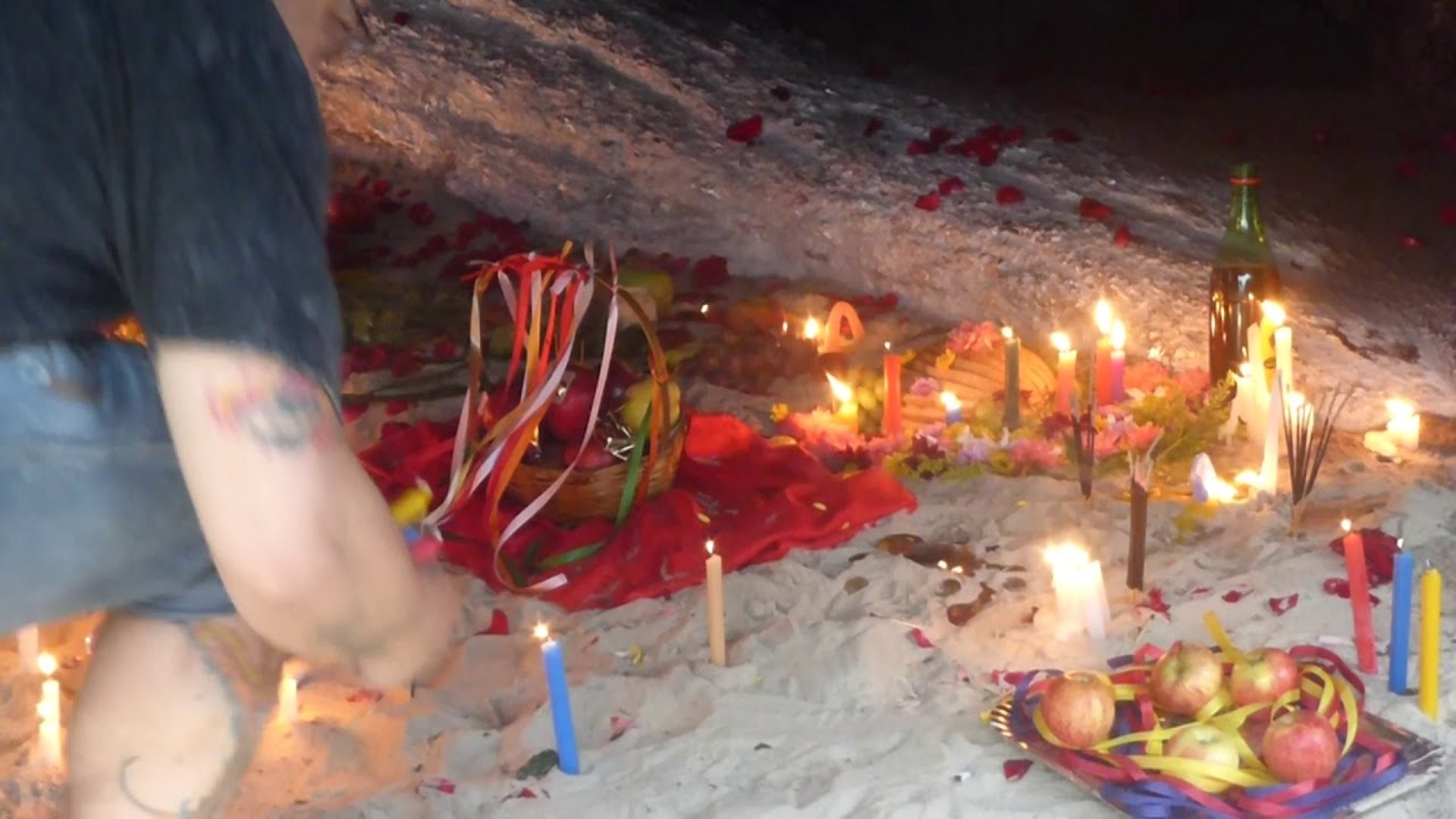
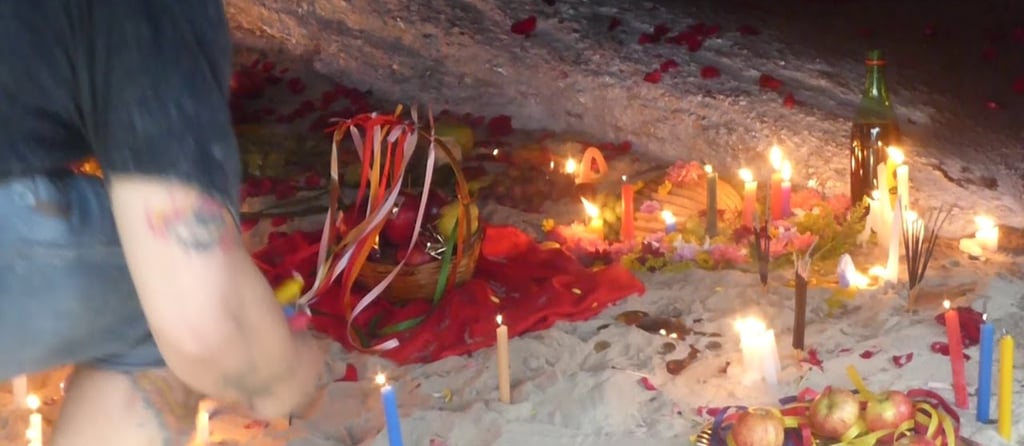
There are some souls so luminous that the sea itself cannot hold them back.
Santa Sara Kali is one of those souls.
Her story begins in what looked, from the outside, like an execution.
After the crucifixion of Jesus, a group of his followers — Maria Madalena, Maria Jacobé, Salomé, and José de Arimatéia among them — were placed in a boat with no oars, no provisions, and no horizon of hope. The intention was clear: they were meant to die at sea. Among them was Sara, a dark-skinned woman of Egyptian or Romani origin. History calls her a servant. The spirit world knows her as something far greater.
When the winds rose and the waters darkened, Sara did what only the truly faithful can do — she let go of everything she had. She removed the diklo, the silk headscarf she wore as a married woman, and cast it onto the waves as a bridge. She called out to Jesus Christ with the voice of someone who has nothing left to lose, and she made a vow:
"If we survive, I will never walk with my head uncovered again."
The boat reached shore safely, landing in what is now Saintes-Maries-de-la-Mer, on the southern coast of France.
Sara kept her promise until her last breath. And from that promise, a tradition was born: to this day, the headscarf worn by Romani women is a living act of devotion to her memory.
The Black Madonna of the Romani People
Kali means "black" in Sanskrit. This is not incidental — it is description, and it is devotion.
Sara is called Black because she carries the depth of night, the richness of soil, the color of fertile earth that feeds all life. She is the Madonna who was never erased into marble whiteness. She remained herself: dark, rooted, road-worn, and incandescent.
Every year on May 24th and 25th, thousands of Romani pilgrims travel to Saintes-Maries-de-la-Mer to honor her. They carry her statue through the streets and into the sea. They drape offerings of cloth and diklos over her shrine until she is wrapped in so many layers of love that she looks like a queen swathed in the prayers of her people.
Because that is exactly what she is.
Sara Kali in Sacred Umbanda
In Sacred Umbanda, Santa Sara Kali holds a singular place: she is the spiritual mother of the Line of the Orient — the great line of Cigano (Romani) spirits who work in the vibration of the Orishas.
She is not simply a Catholic saint carried into a Brazilian tradition. She is a force — a spiritual throne of light that orients the entire Cigano line and gives their missions direction and meaning. When you greet the spirits of this line with Salve Santa Sara Kali!, you are not reciting a phrase. You are invoking a living current of grace.
Her areas of work touch everything the human heart holds most dear. She opens roads that have been sealed for years. She protects women — their bodies, their dreams, their dignity. She carries the miracle of fertility, and many women who longed for children have laid their diklos at her feet and later held those children in their arms. She dissolves heavy energies, crossed conditions, the slow accumulation of spiritual weight. And she guides travelers — those crossing oceans, and those navigating the vast interior waters of the soul.
Building the Cigano Altar
If you feel called to honor Sara Kali in your home, the altar itself is an act of devotion.
Face it toward the east — the direction where the sun rises, the direction of the Orient she governs.
Assemble it on the first day of the New Moon, when energy is receptive and new beginnings take root.
What belongs on a Cigano altar:
Instruments and adornments — castanets, a tambourine adorned with ribbons, strands of beads and colored necklaces. Bracelets, earrings, and many coins, because the Cigano line honors abundance without apology.
The fruit — a red apple for the feminine energy of Santa Sara herself, and a pear for the masculine energy of the Cigano spirits. These two fruits together represent the wholeness of the line.
A cup of water — this is essential. Water is presence, water is memory, water is the medium through which she first proved her power.
Crystals and stones of power:
Amethyst — for joy
Pyrite — for prosperity and abundance
Tiger's Eye — to deflect envy
The Bath of Santa Sara
This is not just a cleansing. It is a crossing.
The Bath of Santa Sara is prepared to clear the path before you, soften what has hardened, and invite her protective presence into your life. You may receive it on her feast days — May 24th and 25th — or on any Wednesday, the day consecrated to her energy.
What You Will Need
10 drops of jasmine essence
6 star anise
Petals of one white rose
2 liters of water
Preparation
Bring the water to a boil and add the jasmine essence, star anise, and rose petals. Let everything simmer together for 15 minutes, allowing the fragrance to rise and fill the space around you. This is not a passive moment — stay present, breathe, speak to her if you feel moved.
Remove from heat. Cover the pot and leave it to rest for 24 hours.
After resting, strain the liquid. What remains is her bath.
How to Receive It
Pour the strained liquid over your body from the neck down. Let it run over your skin without hurrying. There is no need to rinse it off — let it dry on you and carry its energy through the rest of your day.
As the water moves over you, you may simply hold her name in your heart: Sara Kali. That is enough. She knows the sound of someone who comes with sincerity.
A Final Word
Sara Kali survived being cast onto open water with nothing but faith and a headscarf.
Whatever you are crossing right now — whatever sea has been given to you without oars — she has been there before you. She knows what it is to drift in the dark and call out without knowing if anyone hears.
She heard. The shore came.
Hail Santa Sara Kali.
This post is part of the Sacred Umbanda Series by Escola do Pentagrama. To learn more about the spiritual traditions of Sacred Umbanda — including the Line of the Orient and the theology of the Orishas — explore our course, The Language of the Orishas.